

If you’ve been following this newsletter, you know I’ve spent the last few months going deep on the next generation of obesity drugs. Retatrutide — the triple agonist chasing 28% weight loss. Amycretin — Novo Nordisk‘s single-molecule GLP-1/amylin dual agonist with an oral formulation in the works. Wegovy HD — semaglutide turning the dose dial to 7.2 mg.
All of those are exciting stories. But the one I want to tell today is arguably the most disruptive — not because of the weight loss numbers (they’re modest by current standards), but because of what the molecule is.
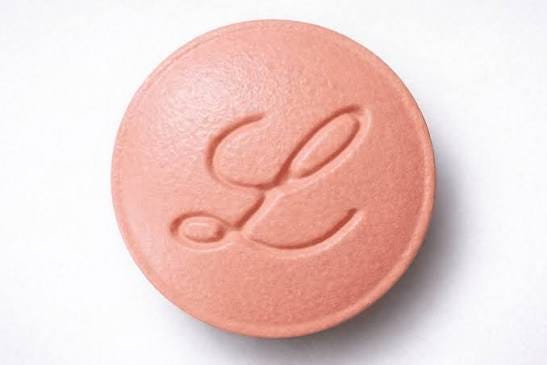
On April 1, 2026, the FDA approved orforglipron, branded as Foundayo. And with that, we got something genuinely new: the first non-peptide, small-molecule GLP-1 receptor agonist ever approved for obesity. A once-daily pill you can take at any time of day, with or without food, with or without water, with zero fasting restrictions.
That might not sound revolutionary if you’re used to thinking about these drugs in terms of “how much weight does it deliver.” But if you think about it from the perspective of who can actually use them, and how — it changes everything.
Let me walk you through the data.
What Is Foundayo?
Foundayo (orforglipron) is an oral, once-daily, small-molecule GLP-1 receptor agonist developed by Eli Lilly and Company.
Drug class: GLP-1 receptor agonist (non-peptide, small molecule)
Route: Once-daily oral tablet
Developer: Eli Lilly
Phase: Approved (ATTAIN phase 3 programme)
Status: FDA approved (1 April 2026). This is real. It’s at your pharmacy.
Here’s how it fits alongside the molecules I’ve already covered in this series:
Semaglutide (Ozempic/Wegovy/Rybelsus): peptide GLP-1 agonist — injection or oral with fasting requirements
Tirzepatide (Mounjaro/Zepbound): peptide dual GLP-1/GIP agonist — injection
Retatrutide (investigational): peptide triple GLP-1/GIP/glucagon agonist — injection
Amycretin (investigational): peptide dual GLP-1/amylin agonist — injection and oral in development
Wegovy HD: semaglutide at 7.2 mg — injection
Foundayo: non-peptide small-molecule GLP-1 agonist — oral, no restrictions
That last line is the whole story. Every other GLP-1 therapy I’ve written about is a peptide — a modified version of the native GLP-1 hormone. Orforglipron isn’t. It’s a synthetic small molecule designed from scratch to activate the GLP-1 receptor. It has no structural resemblance to the native hormone at all.
And that distinction is what makes everything else possible.
Mechanism of Action: Same Receptor, Completely Different Chemistry
I’ll keep this focused, because the receptor-level pharmacology is familiar territory. Orforglipron activates the GLP-1 receptor, which couples to Gs proteins, increases intracellular cAMP, and triggers the downstream effects we know well: appetite suppression, slower gastric emptying, glucose-dependent insulin secretion.
What’s different is how it gets there.
Peptide GLP-1 agonists — semaglutide, liraglutide, tirzepatide — are all engineered versions of a hormone. They’re exquisitely effective but inherently fragile in the GI tract. Oral semaglutide (Rybelsus, and now the Wegovy pill) had to bolt on SNAC — a sodium salcaprozate absorption enhancer — to survive stomach acid and get absorbed. Which is why it comes with strict dosing rules: take it on an empty stomach, with no more than 4 ounces of water, and wait 30 minutes before eating or drinking anything else. Every morning. Without fail.
Orforglipron sidesteps all of that. As a small molecule, it’s inherently stable in the GI tract and doesn’t need an absorption enhancer. Take it whenever you want. With breakfast, with coffee, in the middle of the day — it doesn’t matter. No fasting. No water rules. No waiting.
The pharmacology is subtly different too, and this part fascinates me. Orforglipron exhibits biased agonism at the GLP-1 receptor — it produces cAMP signaling comparable to native GLP-1, but generates significantly less beta-arrestin recruitment. Less beta-arrestin means less receptor internalization and potentially more sustained receptor activation at the cell surface. Whether this biased signaling profile translates into clinically meaningful differences is still being studied, but it’s a pharmacologically elegant feature. The work by Sloop and colleagues at Lilly, published in Science Translational Medicine, showed that orforglipron achieves full biological response at relatively low receptor occupancy — again, something peptide agonists typically don’t do.
And then there’s manufacturing. Small molecules are dramatically cheaper and faster to produce at scale than peptides. In a market that’s been plagued by supply shortages and sticker shock, this matters. A lot.
The FDA Approval: 50 Days
This part genuinely stunned me.
Foundayo was approved on April 1, 2026 under the FDA’s Commissioner’s National Priority Voucher (CNPV) pilot programme — and the review took just 50 days from NDA submission. That’s 294 days ahead of its PDUFA target date of January 20, 2027. The fastest new molecular entity approval since 2002.
Now, the clinical researcher in me wants to flag what I flagged with Wegovy HD: speed is wonderful when the evidence base underneath it is deep. With Wegovy HD, you had decades of semaglutide data to lean on. With orforglipron, you have a brand-new molecule with a novel mechanism. The ATTAIN programme was large and well-designed, but this drug doesn’t carry the long-term real-world track record that semaglutide does. I’m not raising alarm bells — I’m just noting that the 50-day review deserves the same honest scrutiny I gave to Wegovy HD’s 54-day approval.
The approved indication: reduction of excess body weight and maintenance of weight reduction long term, in adults with obesity (BMI ≥30) or overweight (BMI ≥27) with at least one weight-related comorbidity, alongside diet and exercise.
Dosing starts at 0.8 mg once daily and titrates up through six dose levels — 0.8 mg, 2.5 mg, 5.5 mg, 9 mg, 14.5 mg, 17.2 mg — with at least 30 days at each step. The 0.8 mg and 2.5 mg are titration-only doses; maintenance begins at 5.5 mg and goes up to the highest tolerated dose.
The Clinical Data: The ATTAIN Programme
ATTAIN-1 — The Pivotal Obesity Trial
Study: Orforglipron, an Oral Small-Molecule GLP-1 Receptor Agonist for Obesity Treatment. New England Journal of Medicine. 2025.
Design: Phase 3, 72-week, randomised, double-blind, placebo-controlled trial. 3,127 adults with obesity or overweight plus at least one comorbidity (hypertension, dyslipidaemia, OSA, or cardiovascular disease), without diabetes. Conducted across 10 countries. Participants randomised 3:3:3:4 to orforglipron 6 mg, 12 mg, 36 mg (now labelled 17.2 mg on the FDA prescribing information), or placebo.
Efficacy Results (at 72 weeks):
Using the efficacy estimand (the treatment effect if everyone stayed on and adhered to treatment):
Placebo: −0.9% (−2.2 lbs)
Orforglipron highest dose: −12.4% (−27.3 lbs)
59.6% of participants on the highest dose achieved ≥10% weight loss
Using the treatment-regimen estimand (the ITT-like analysis regardless of adherence), the numbers come in lower: −11.2% weight loss, with 54.6% achieving ≥10%. That’s the NEJM primary analysis, and it’s the number you’ll see in most regulatory summaries.
I’m going to be honest about where these numbers sit.
12.4% (or 11.2% on the more conservative estimand) is clinically meaningful. It crosses every threshold for metabolic benefit. But let me put it next to the drugs I’ve already covered in this series:
Retatrutide: 28.3% at 80 weeks
CagriSema: 22.7% at 68 weeks
Tirzepatide: 22.5% at 72 weeks
Amycretin: 22.0% at 36 weeks (early data)
Wegovy HD: 20.7% at 72 weeks
Semaglutide 2.4 mg: 17.5% at 72 weeks
Orforglipron: 12.4% at 72 weeks
Orforglipron is at the bottom of that list. And I think it’s important to say that directly, because the conversation around this drug should be honest about what it is and what it isn’t. It is not a weight-loss champion. It is an access champion. And those are two different conversations.
The trial also showed significant improvements in blood pressure, lipid profiles, fasting glucose, and hsCRP — a marker of systemic inflammation. These cardiometabolic improvements are consistent with what we see across the GLP-1 class.
ATTAIN-2 — Obesity With Type 2 Diabetes
Study: Orforglipron, an oral small-molecule GLP-1 receptor agonist, for the treatment of obesity in people with type 2 diabetes (ATTAIN-2). The Lancet. 2026.
Design: Phase 3, 72-week, double-blind, placebo-controlled trial across 136 sites in 10 countries. Adults with BMI ≥27 and HbA1c 7–10%.
Efficacy Results (at 72 weeks, highest dose, efficacy estimand):
Weight loss: −10.5% (−22.9 lbs) vs. placebo
A1C reduction: −1.8% from a baseline of ~8.1%
Improvements across cardiometabolic risk markers
Same pattern we see across the entire class — patients with T2D lose less weight than those without. I wrote about this in my Wegovy HD piece: that persistent gap (20.7% vs. 14.1% for semaglutide, 12.4% vs. 10.5% for orforglipron) is one of the most interesting open questions in metabolic medicine. The counter-regulatory mechanisms that defend body weight in the setting of insulin resistance are still not fully understood.
ACHIEVE-3 — Head-to-Head Against Oral Semaglutide
This is the trial that gets prescribers’ attention.
Study: Published in The Lancet. 2026.
Design: 52-week, head-to-head phase 3 trial. 1,698 adults with poorly controlled T2D on metformin. Four arms: orforglipron 12 mg, orforglipron 36 mg, oral semaglutide 7 mg, oral semaglutide 14 mg.
Orforglipron won on every primary and key secondary endpoint:
A1C reduction: ~2.2 percentage points (orforglipron 36 mg) vs. ~1.4 points (semaglutide 14 mg)
Weight loss: ~9.2% (orforglipron 36 mg) vs. ~5.3% (semaglutide 14 mg)
But here’s the caveat I have to flag — and this is important. Oral semaglutide was tested at the 7 mg and 14 mg doses. Those are the Rybelsus doses. The newer oral Wegovy (semaglutide 25 mg, approved for weight loss in December 2025) was not included in this comparison. An indirect analysis published separately suggested that oral semaglutide 25 mg may outperform orforglipron for weight reduction by approximately 3 percentage points.
We still don’t have a direct head-to-head between orforglipron and oral semaglutide 25 mg. That’s the trial the field needs.
ATTAIN-MAINTAIN — The Switch Study
This one is genuinely clever, and I love the design.
Participants from the SURMOUNT-5 trial — people who had been on the highest tolerated doses of Wegovy (semaglutide) or Zepbound (tirzepatide) for 72 weeks — were re-randomised to either orforglipron or placebo for an additional 52 weeks. Published in Nature Medicine. 2026.
The question: can an oral small-molecule GLP-1 maintain the weight loss achieved with potent injectables?
The answer: yes. Orforglipron met the primary and all key secondary endpoints. Patients switching from tirzepatide to orforglipron maintained 74.7% of their weight reduction versus placebo.
Think about what that means clinically. You could start a patient on an injectable — Zepbound, Wegovy — get them to their target weight, and then transition them to a daily pill for maintenance. No more needles. No more weekly injections. A “treat-to-target, then maintain orally” paradigm. That could define the next chapter of obesity pharmacotherapy.
Safety: Consistent With the Class, With Nuances
The adverse event profile follows the GLP-1 playbook — GI side effects dominate, are dose-dependent, mostly occur during titration, and are generally mild to moderate.
From ATTAIN-1 (highest dose vs. placebo):
Nausea: 33.7% vs. 10.4%
Constipation: 25.4% vs. 9.3%
Diarrhoea: 23.1% vs. 9.6%
Vomiting: 24.0% vs. 3.5%
Discontinuation due to adverse events: 10.3% at the highest dose vs. 2.7% with placebo. That’s worth noting — in ACHIEVE-3, discontinuation rates with orforglipron (8.7–9.7%) were roughly double those seen with oral semaglutide (4.5–4.9%). GI adverse events affected 58–59% of orforglipron participants versus 37–45% with semaglutide. So while the GI profile is in the same family, orforglipron does appear to be a bit rougher on the stomach. Something for prescribers to counsel patients about during titration.
No hepatic safety signal was identified — important for a novel small molecule. Cardiovascular safety was confirmed in the ACHIEVE-4 trial (n=2,749), which showed noninferiority to insulin glargine for MACE-4 events in high-risk T2D patients.
Standard GLP-1 class contraindications apply: personal or family history of medullary thyroid carcinoma or MEN2. Concomitant use with another GLP-1 receptor agonist is not recommended.
Cost and Access: This Is Where It Gets Interesting
If Foundayo’s efficacy numbers tell one story, its pricing tells another — and arguably the more important one.
Self-pay through LillyDirect:
0.8 mg (starter): $149/month
2.5 mg: $199/month
5.5 mg and 9 mg: $299/month
14.5 mg and 17.2 mg: $349/month (discounted to $299 with refills within 45 days)
With commercial insurance + Lilly savings card: as low as $25/month.
Medicare Part D: coverage began July 1, 2026 under the Medicare GLP-1 Bridge programme at a flat $50/month copay.
For context, Wegovy and Zepbound self-pay costs run $1,000–$1,300/month. Foundayo at $299–$349/month is a fundamentally different price point. And because it’s a small molecule — not a biologic peptide — manufacturing at scale is inherently cheaper and faster. If Lilly can deliver on supply (and small molecules are far easier to scale than peptides), the access implications are enormous.
Insurance formulary placement is still evolving, but the pricing signal from Lilly is unmistakable: they’re not trying to be the premium option. They’re trying to be the high-volume option.
What Excites Me — And What I’m Watching
Here’s my honest take.
What excites me most is the ATTAIN-MAINTAIN data and the treatment paradigm it opens up. “Inject to target, maintain with a pill” is exactly the kind of pragmatic framework real-world patients need. Not everyone wants to be on a weekly injection for life. The idea that you could achieve your goal with a potent injectable and then transition to an easy daily pill — that’s a game-changer for adherence and patient satisfaction.
I’m also genuinely fascinated by the small-molecule pharmacology. Biased agonism at the GLP-1 receptor, low receptor occupancy for full biological response — these aren’t just academic curiosities. They may explain why orforglipron’s efficacy and tolerability profile looks the way it does, and they open the door to next-generation small-molecule designs that could push the efficacy ceiling higher.
What I’m watching:
The oral GLP-1 head-to-head we still don’t have. Orforglipron vs. oral semaglutide 25 mg for obesity. Until we see that trial, the comparative efficacy conversation remains incomplete. ACHIEVE-3 compared against the lower Rybelsus doses — that’s not the same question.
Cardiovascular outcomes. ACHIEVE-4 showed noninferiority to insulin glargine for MACE-4. That’s important for regulatory purposes, but it’s not the same as the SELECT-level evidence semaglutide carries — actual MACE reduction. Orforglipron doesn’t have that yet. For a new molecule, that data gap matters.
The GI tolerability question. 10% discontinuation at the highest dose, and roughly double the GI event rates compared to oral semaglutide in the head-to-head. That’s manageable, but it’s not nothing. Real-world adherence data will be the real test.
Long-term durability. 72 weeks is the longest follow-up we have. Obesity is a chronic disease requiring chronic treatment. We need years, not months, of data on a brand-new molecule.
Access for the rest of the world. The pricing story is exciting for the US market. For those of us outside the US, the question is when and at what price Foundayo reaches our pharmacies. Small-molecule manufacturing advantages should theoretically help with global access, but “should” and “does” are different things.
The Bigger Picture
I keep coming back to a framing that I think captures what’s happening in the field right now.
Retatrutide is chasing the ceiling on efficacy — 28%, maybe 30%, with a triple agonist. Wegovy HD is squeezing another gear out of the molecule we trust most. CagriSema is combining proven pathways. Amycretin is engineering dual action into a single molecule.
And Foundayo? Foundayo is asking a different question entirely: what happens when you take GLP-1 therapy and make it radically simple?
No injections. No fasting rules. No waiting. No water restrictions. A pill you take whenever you want, that costs a fraction of what the injectables cost, and that’s manufactured with small-molecule economics.
The weight loss numbers won’t top any leaderboard. But if the question is “which drug will actually reach the most patients?” — Foundayo might end up being the most important approval of 2026.
The oral GLP-1 era started with oral semaglutide, a peptide squeezed into a pill with an absorption enhancer and strict dosing rules. Foundayo takes the next step: a purpose-built small molecule with none of those constraints.
Two fundamentally different molecules. Two fundamentally different approaches to the same receptor. A choice that didn’t exist 12 months ago.
This is metabolic medicine’s moment. And it’s just getting started. ✌️
Key References
Orforglipron, an Oral Small-Molecule GLP-1 Receptor Agonist for Obesity Treatment. New England Journal of Medicine. 2025. NEJM
Orforglipron, an oral small-molecule GLP-1 receptor agonist, for the treatment of obesity in people with type 2 diabetes (ATTAIN-2). The Lancet. 2026. Lancet
ACHIEVE-3: Orforglipron delivered superior blood sugar control and weight loss compared to oral semaglutide in head-to-head type 2 diabetes trial. The Lancet. 2026. Eli Lilly Press Release
Orforglipron for maintenance of body weight reduction (ATTAIN-MAINTAIN). Nature Medicine. 2026. Nature Medicine
ACHIEVE-4: Orforglipron meets CV safety endpoints in T2D and obesity. The Cardiology Advisor
FDA approves Lilly’s Foundayo (orforglipron). April 2026. Eli Lilly Press Release
Sloop KW et al. Pharmacological characterization of orforglipron. Science Translational Medicine. 2024.
Disclaimer: Foundayo (orforglipron) is approved by the US FDA for chronic weight management in adults with obesity or overweight with weight-related comorbidities. The data presented here comes from published clinical trials and company press releases. This article is for educational and informational purposes only and does not constitute medical advice. Always consult a qualified healthcare professional before starting, stopping, or changing any medication.